AI Career Research Assistant
Most job-search automation is built for volume. This one isn't. AI handles the busywork so my time goes into the two things that actually matter: applying where I'm a strong fit and reaching the right person with a message worth reading.
The problem
Volume isn't a strategy.
Across LinkedIn and the growing list of job-search services, the trend is more: more applications, more automation, more of the same generic resume. Recruiters see the same thing hundreds of times a day, and much of it never gets a real look. Sending more doesn't fix that. Sending better, sooner, to the right person does.
What works
Two things move the needle.
Fit comes first
A strong match is worth applying to whenever I find it. Posted in the last few days or with few applicants, even better.
Reach the right person
Not a box to check. Find the recruiter or hiring manager who owns the role and send a short note that's specific to it.
Where AI fits
Time saved, time reinvested.
The assistant takes the work that eats hours but doesn't need judgment: searching boards, scoring fit, flagging fresh roles, and tailoring a resume and cover letter from one master. Every hour it saves goes back into targeting the right roles and the right people.
What's different
Not another job alert.
Job boards already send matches. Most are generic: roles from one site, matched on keywords or a profile summary, and the same ones keep coming back. This is built around my actual experience, and it gets sharper the more I use it.
Many sources, one fresh list
Company career sites, job boards and saved searches, combined into one ranked list. Duplicates are merged, and stale or closed postings drop out of view but still count in my numbers.
Fit scored against my real resume
Each role is read against my full master resume and what I'm looking for, with the reasons and the gaps spelled out.
It learns from my feedback
When I pass on a role and say why, the recommendations sharpen and my requirements get tighter over time.
A few good applications, not many
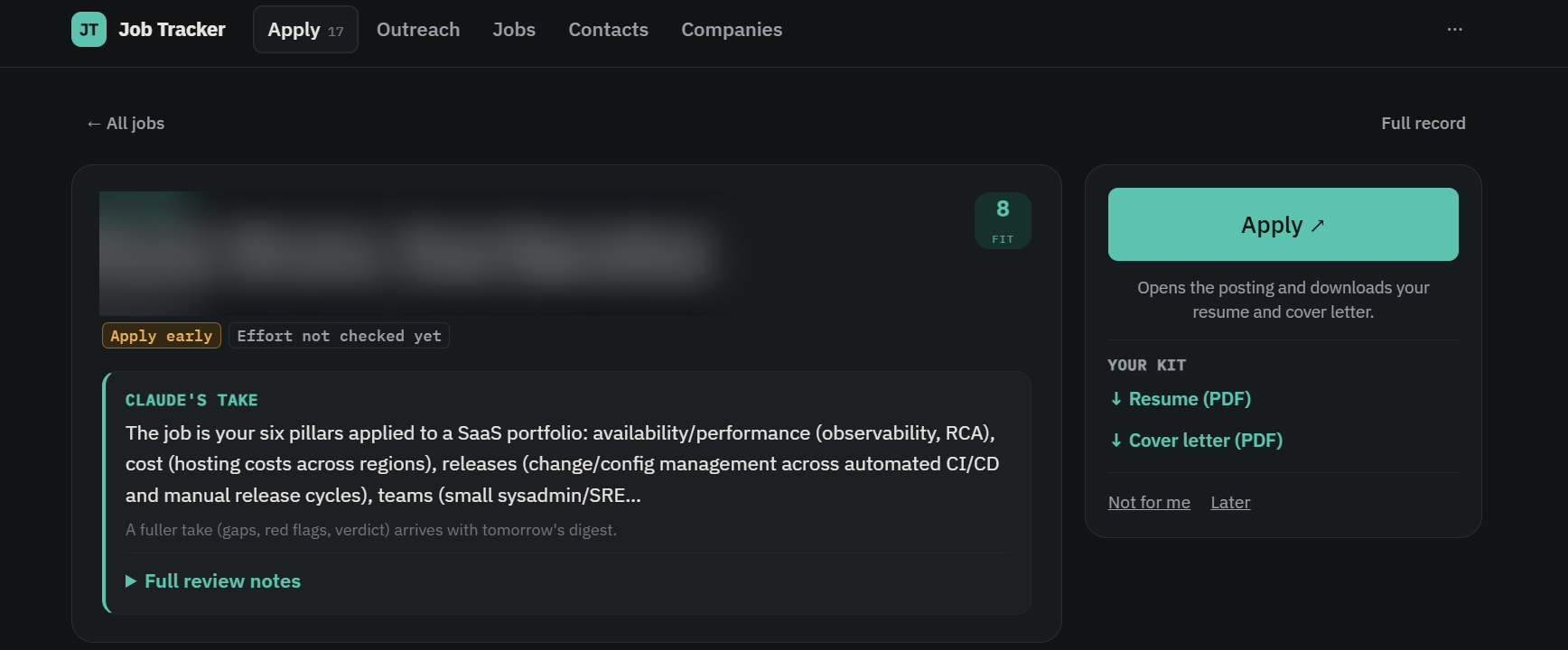
I apply to three to five roles on a busy day, and some days none. Each gets a resume and cover letter tuned to the role, built only from my real experience.
The personal part stays personal
Only after I apply do I look for the right person and write the note myself. No automated contact, ever.
One place, plus a morning email
Everything lives in the dashboard, with a short email each morning for a look over coffee.
How a day works
The assistant does the research. I do the rest.
- 6:45 AM runSearches company boards and saved searches, then sends a morning email
- RankScores fit first, boosts new and low-competition roles
- PrepareTailored resume and cover letter, posted to my dashboard
- I applyReview the kit, apply myself
- I reach outFind the right person, send a real note
Networking
The right person, and something worth reading.
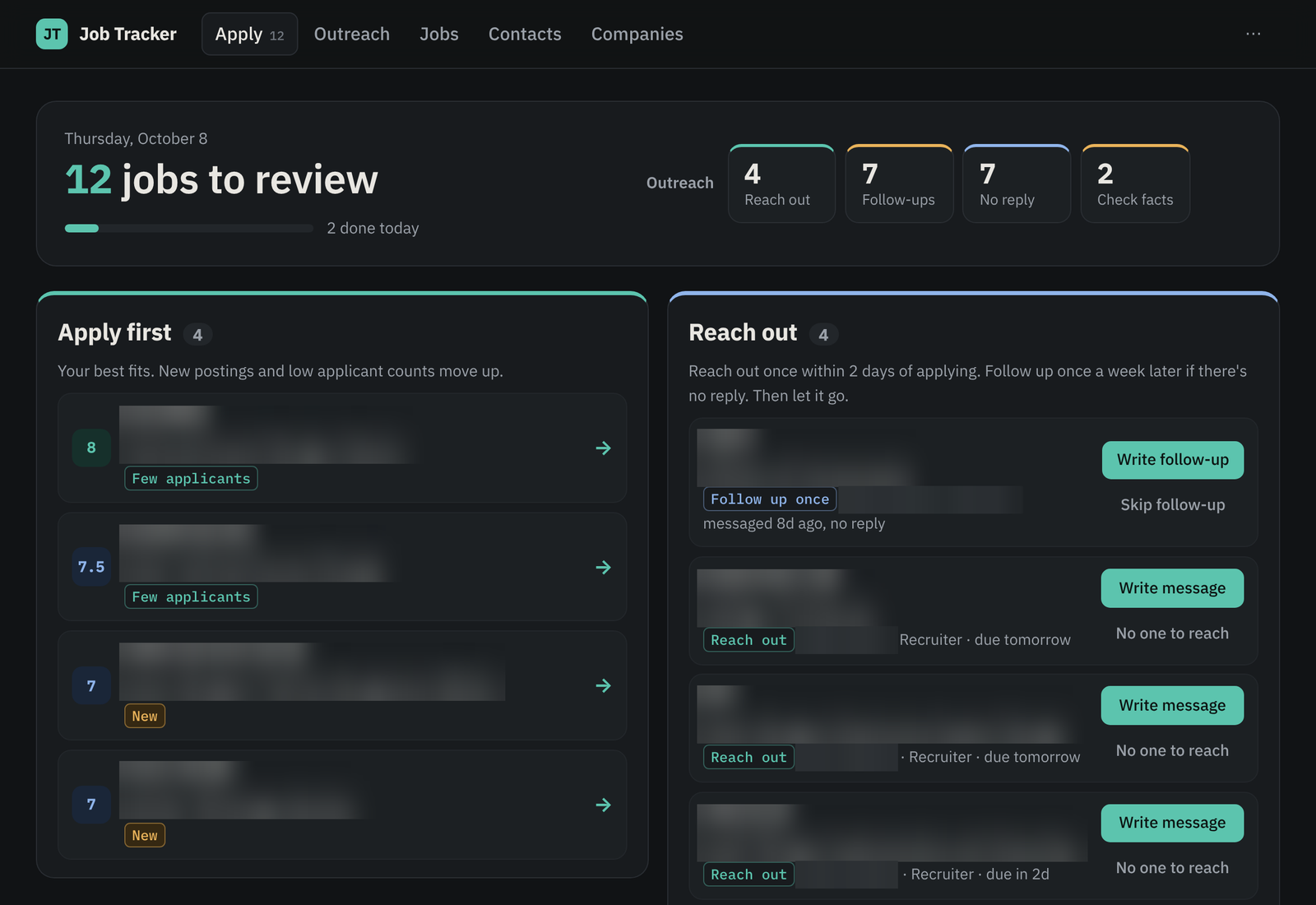
This is where replies come from, so it gets the same priority as applying. Early on, one short note to a company's talent person turned a quiet application into a phone call within an hour.
- Find the right contact myself. After I apply, I look up the recruiter or hiring manager who owns the role. Smaller companies often have no one to reach, and that's fine.
- Make it specific. I start from my own short template, rewrite it for that role and person, and note what made it specific.
- Record every touchpoint. Messages, replies, calls and new connections are logged against the job, so I know where every conversation stands.
- Reach out once, follow up once. When there's a clear contact, I send a short note within a day or two of applying. No reply? One brief follow-up about a week later, then I let it go. Plenty of teams handle hiring entirely through the application, and silence is an answer.
- Let the tracker age it out. After 21 days with no reply, the dashboard flags it as "No response." At 45 days it suggests closing it. I confirm; nothing closes on its own.
It never messages, connects with or follows anyone.
Guardrails
What it must never do.
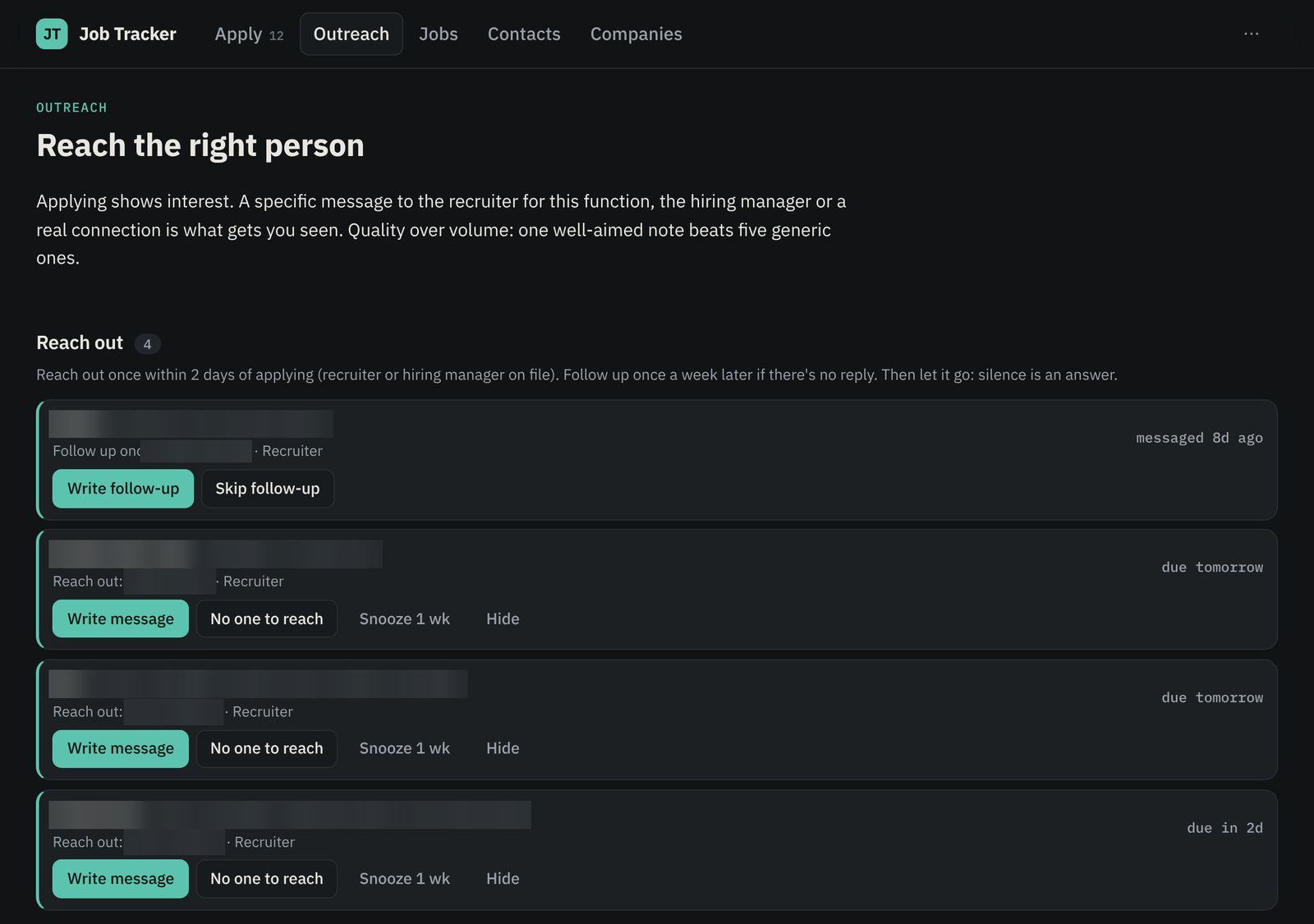
- Never applies, signs in or messages anyone. Every application and every note is sent by me.
- Never invents experience. Every claim traces to my master resume.
- Light touch on job sites. It reads a handful of public job listings at a human pace and nothing else: no profiles, no people search, no messages. Sign-in walls and CAPTCHAs are logged, never bypassed.
- Changes need my approval. The assistant's instructions change only when I approve the exact wording.
Architecture
Small, private and locked down.
- Scheduled AI runResearch and document prep
- Scoped keyReaches its intake endpoints, nothing else
- Cloudflare WorkerChecks every request itself
- Database + filesD1 for jobs, R2 for PDFs
- DashboardBehind Cloudflare Access
The six pillars, applied
The same way I run operations.
Cost
Runs on free tiers today, on a design that scales to paid tiers without a rewrite.
Performance
Best fits rise to the top, with new, low-competition roles boosted.
Security
Login checked at the edge and again by the app, a narrowly scoped service token, and automated security scans on every push.
Releases
Every change goes through git and deploys automatically. The AI's rules only change when I approve them.
Teams
AI does the research. I make the calls and build the relationships.
Customers
Recruiters hear from a real person with a real note, never automated outreach.
Results
Coming soon.
Each application records the posting's age, applicant count and fit at the moment I applied, plus who I contacted, what made the note specific, and the first response. Once there's enough to mean something, this section will answer four questions with real numbers, each shown with its sample size:
- Does timing still matter? Response rate by posting age and applicant count, among strong fits.
- Does reaching the right person matter? Reply rates with and without a targeted note.
- Where do applications stall? The full funnel, from roles found to applied, replied, screened, interviewed and offered.
- Is the fit score honest? Whether high-fit roles actually get more callbacks, fed back into how the assistant ranks.